Projects

Five efforts in two areas. Three forecast what an operation's flights will do next: one produces the forecasts, one turns them into decisions, and one keeps making them better. Two look after passengers when a flight breaks: one digitalises how disruption is handled, and one personalises what each passenger is offered.

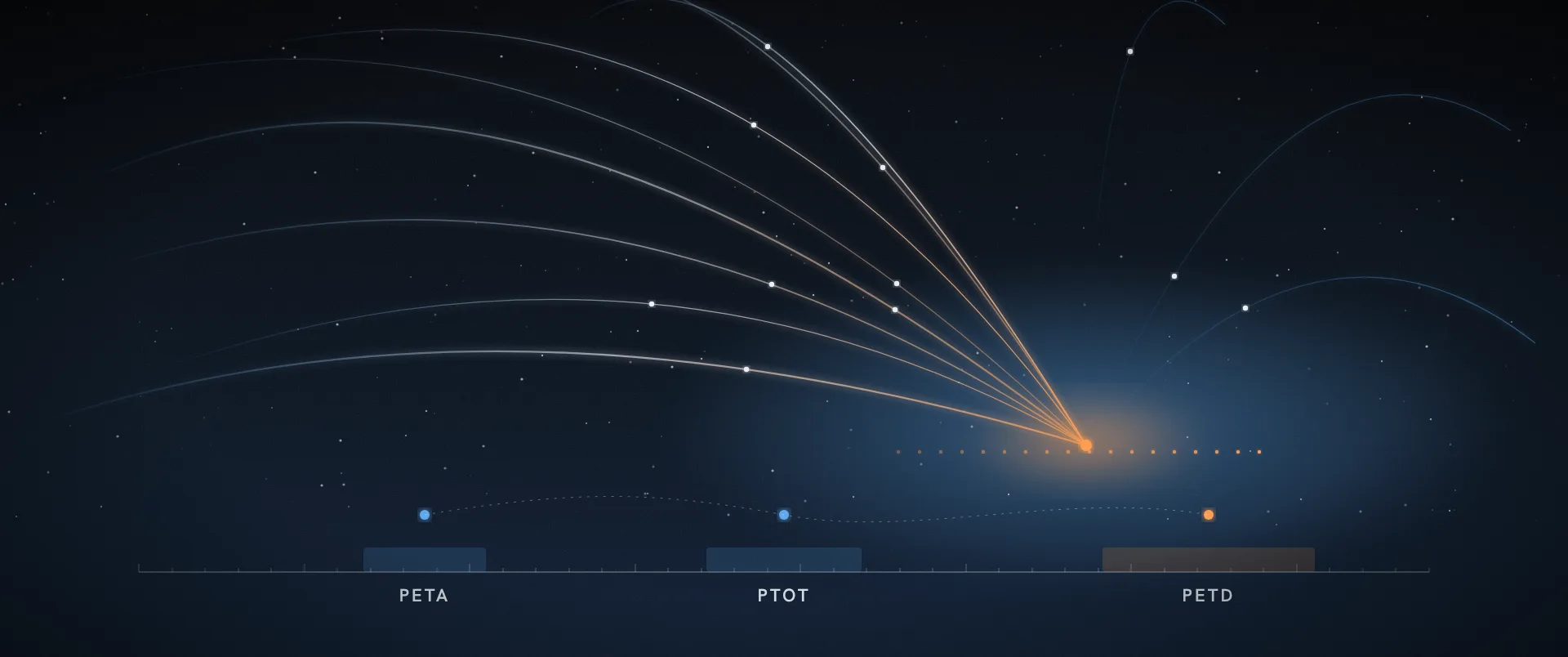
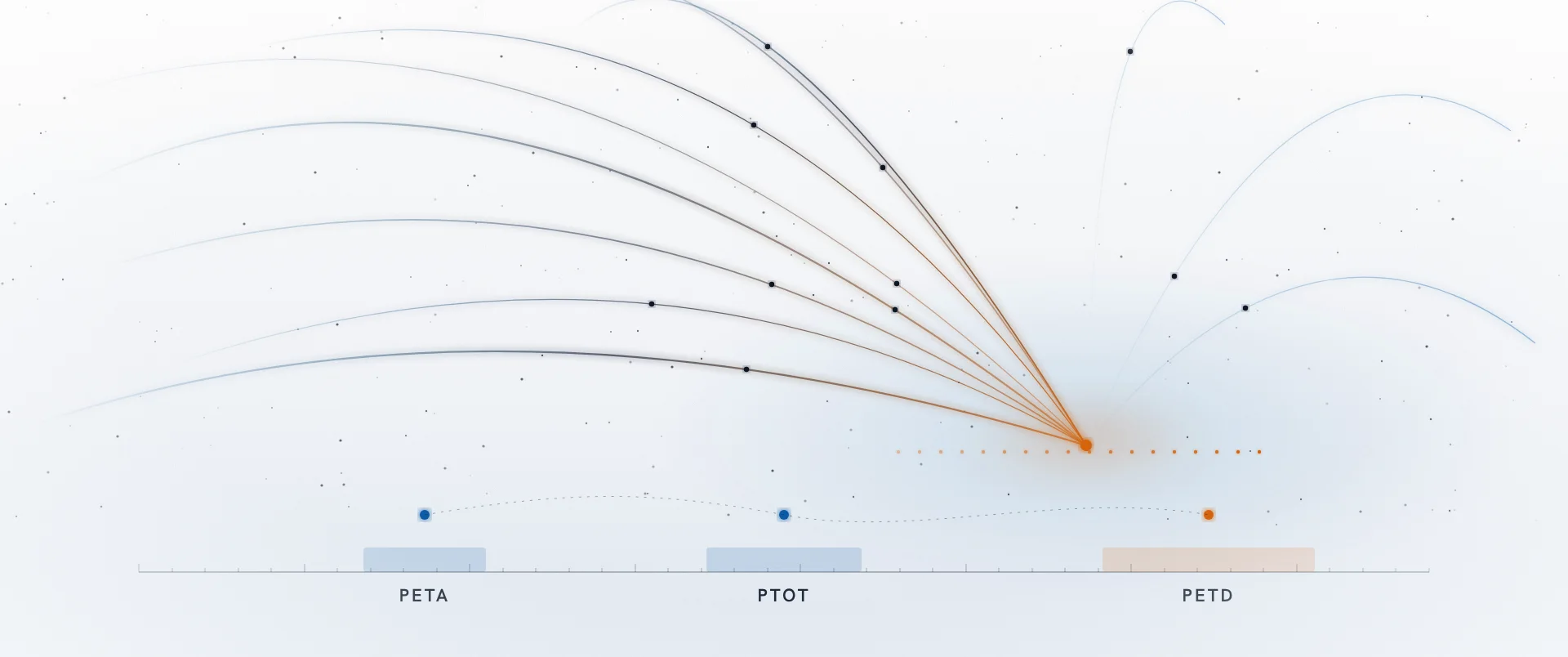
Flight paths converging on a runway above a timeline marked PETA, PTOT and PETD. Flight paths converging on a runway above a timeline marked PETA, PTOT and PETD.

In production, forecasting engine

PETA-Engine

The engine receives flight events and runs three prediction models: flight time (AET/EET), taxi time and turnaround. From them it calculates the PETA/PTOT/PETD chain: when each flight will land, when it will take off, and when the next rotation will be ready to depart. Everything is written to the HubTM tables.

  • Three models working together: flight time, taxi and turnaround
  • A single chain of predicted landing, take-off and next departure times
  • The source of the data: it predicts, it does not decide
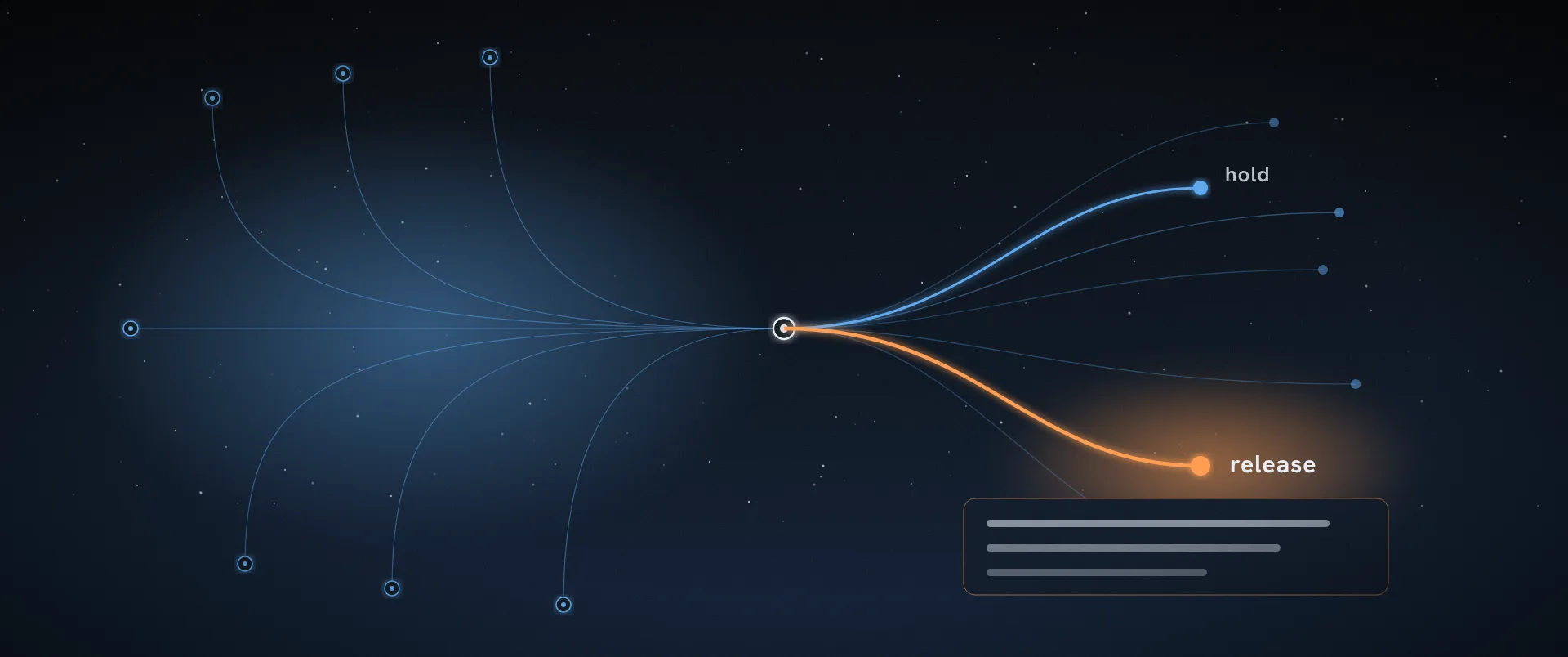
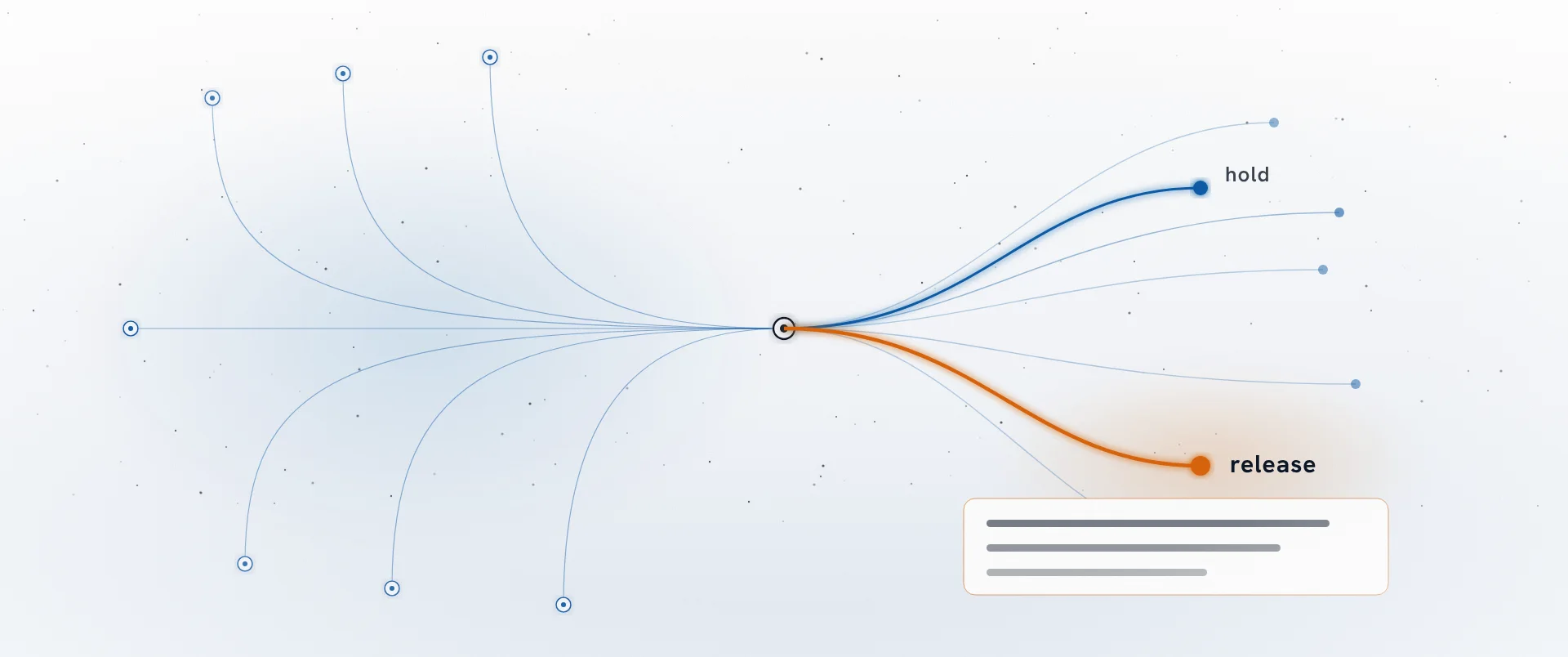
Signals feeding a decision point that forks into two options, hold and release, with a written explanation. Signals feeding a decision point that forks into two options, hold and release, with a written explanation.

In production, decision layer

HubTM AI Agentic

This layer reads what PETA-Engine writes and turns it into decisions. It detects when a predicted arrival or departure changes, adds context such as passenger and baggage connections, crew and curfews, runs an optimiser to generate options such as hold or release, and explains its recommendation in plain language. Recommendations already reach operators live through Telegram.

  • Detects changes in predicted arrival and departure times
  • Combines connections, crew and curfews into one view
  • Explains each recommendation in natural language
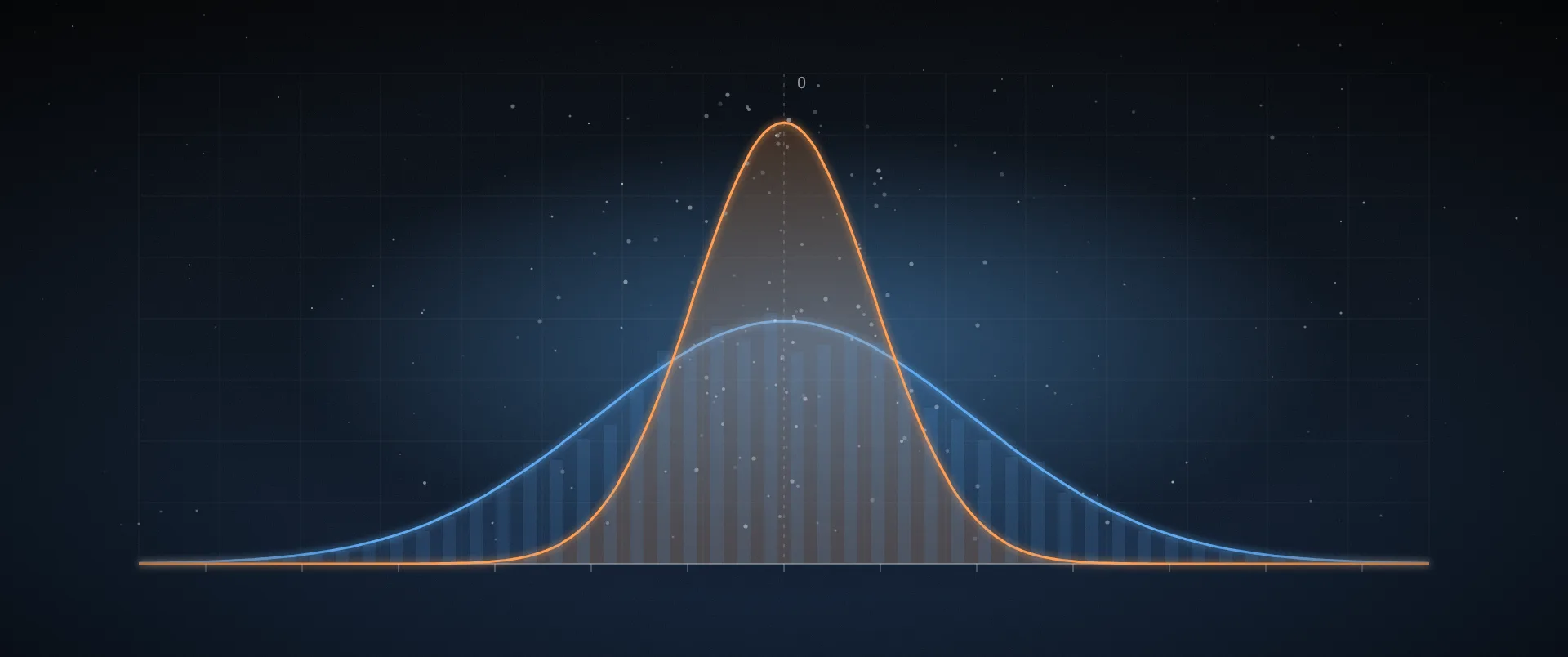
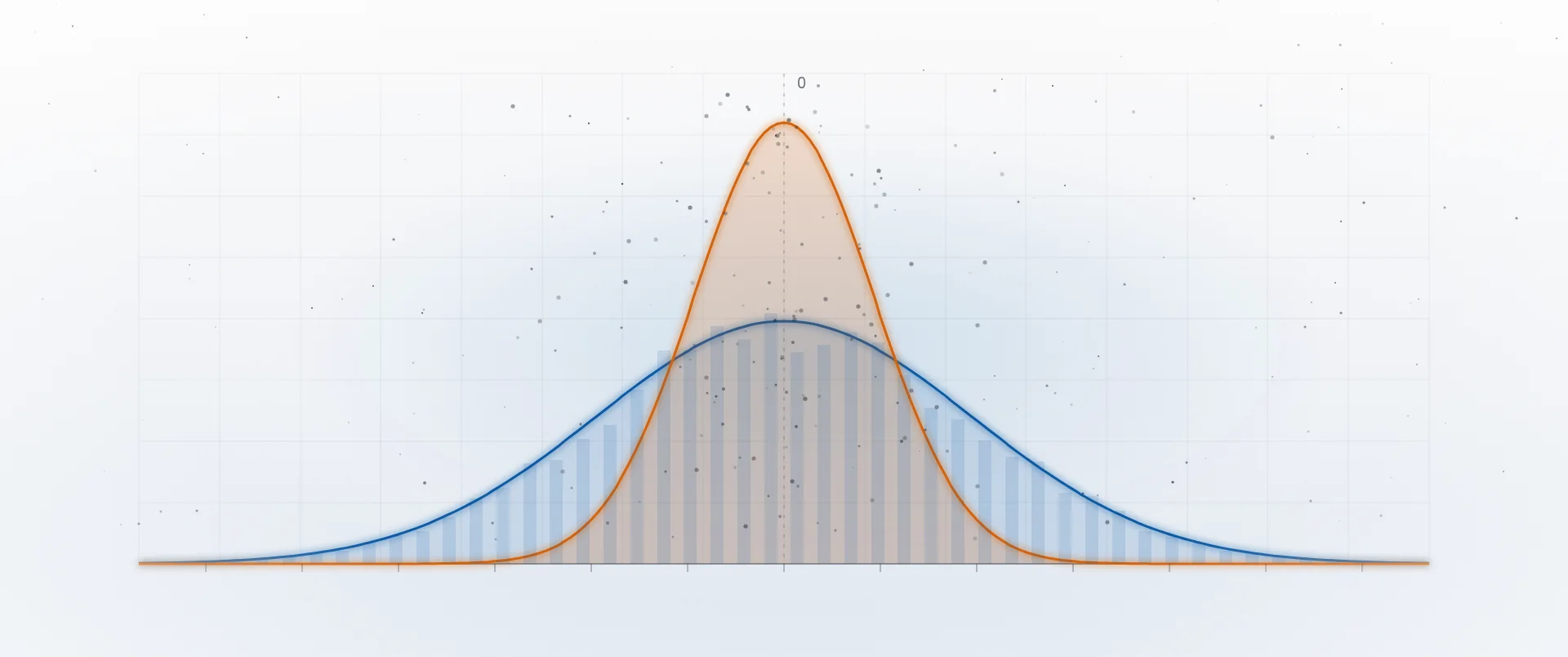
Two overlapping error distributions, one narrower than the other, on a laboratory grid. Two overlapping error distributions, one narrower than the other, on a laboratory grid.

Research

PETA-Project

Research to improve the quality of the forecasts. It started by testing whether the median real flight time of a route can do better than the planned time, an approach known as the EET fallback. It runs in parallel to the other two projects, and what it validates, such as a better flight-time model, can be adopted by PETA-Engine.

  • Starts from the EET fallback: median real flight time against the plan
  • Runs alongside production, not downstream of it
  • Validated improvements feed PETA-Engine
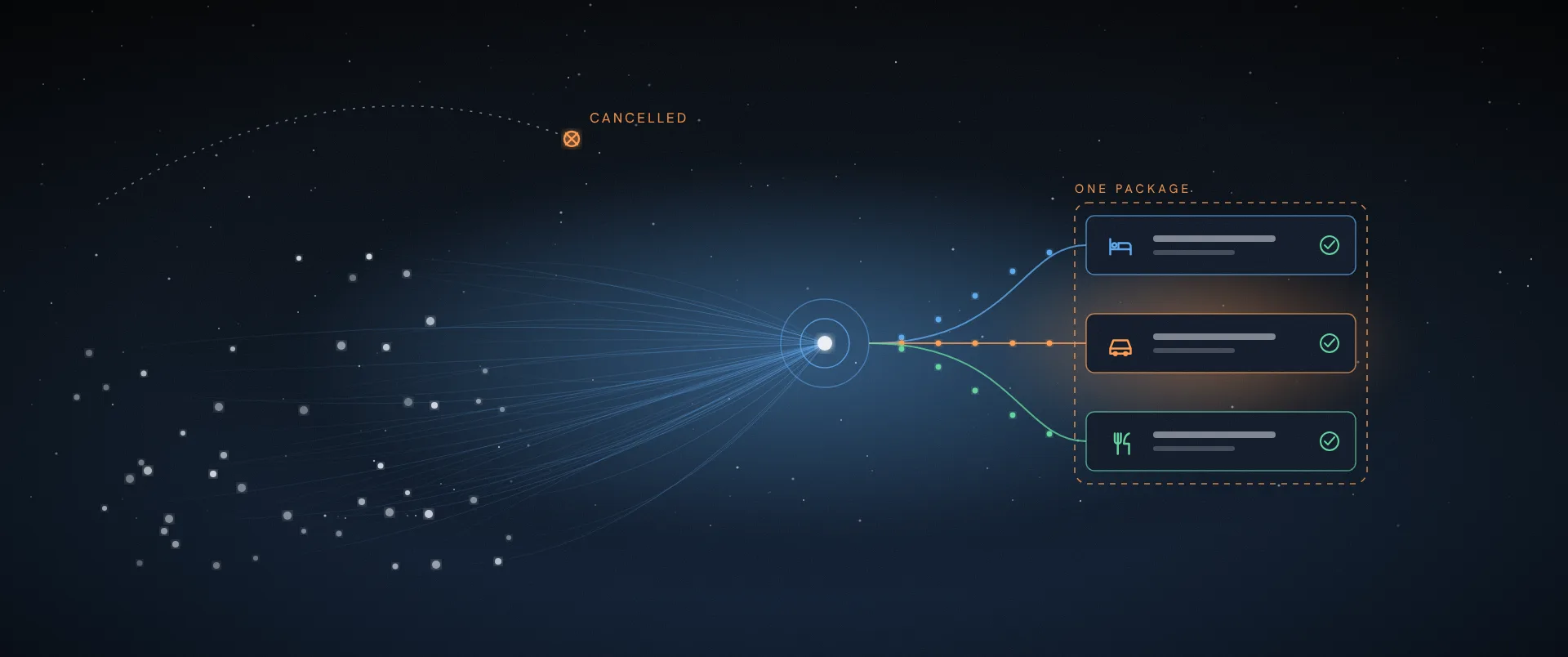
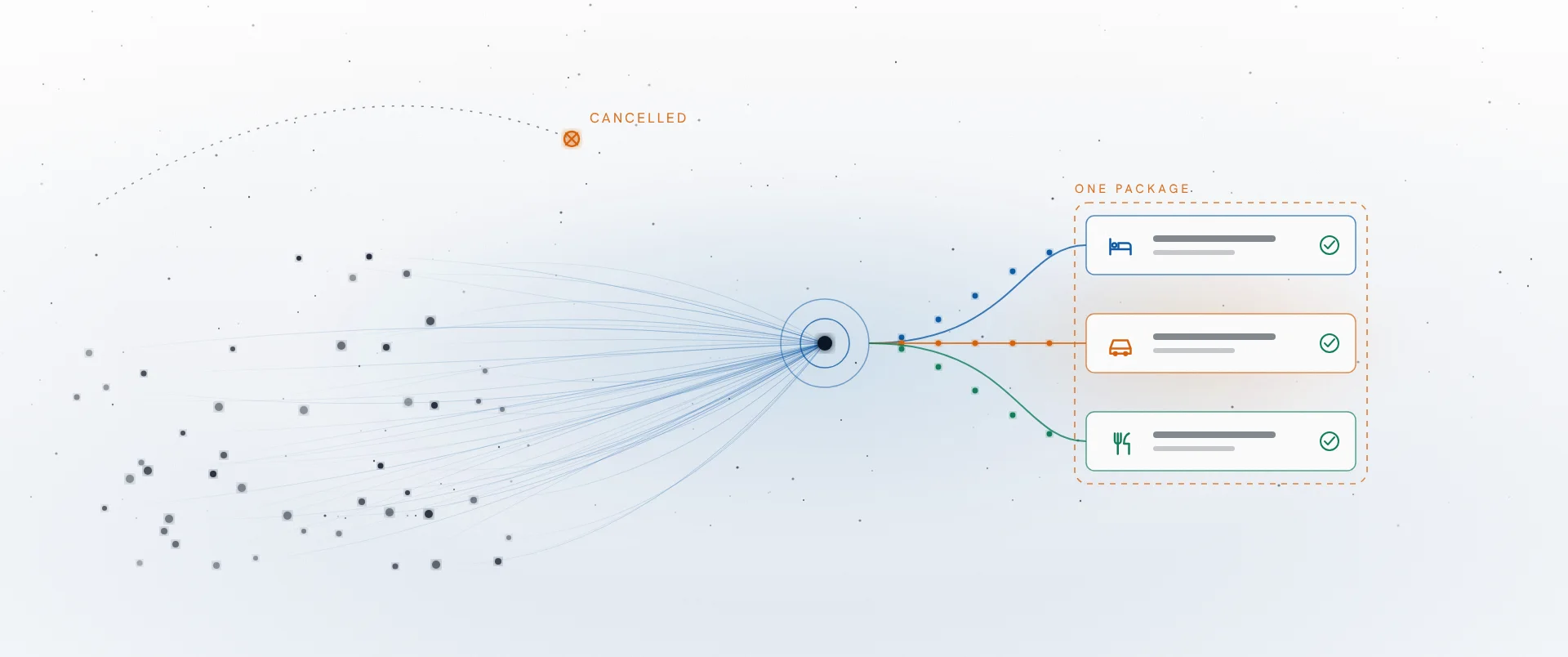
Passengers from a cancelled flight converging on one point and fanning out into a hotel, transport and meals package. Passengers from a cancelled flight converging on one point and fanning out into a hotel, transport and meals package.

In development, process digitalisation

Disruption Packages

When a flight is cancelled or badly delayed, airlines still handle much of the passenger response by hand: calls to hotels and transport companies, spreadsheets and e-mails. This project digitalises that process end to end. It detects the disruption, identifies the affected passengers, checks entitlements and availability, and builds a package of hotel, transport and meals that reaches each passenger directly.

  • From disruption to a ready package in one automated flow
  • Hotel, transport and meals built together, not arranged one by one
  • Passengers receive their package directly, without queueing

See it in action

Digitalising disruption handling A cancelled flight is detected, affected passengers are checked against rules and availability, a package of hotel, transport and meals is built automatically, and each passenger receives it on their phone. 01 · DISRUPTION 02 · CHECKS 03 · PACKAGE 04 · DELIVERED Flight 4821 LIS → FRA · 23:40 CANCELLED Affected passengers Detected automatically Eligible passengers verified Rights and policy rules Hotel and seat availability Hotel Transport Meals One package built per passenger Ready Sent to each passenger no calls, no spreadsheets
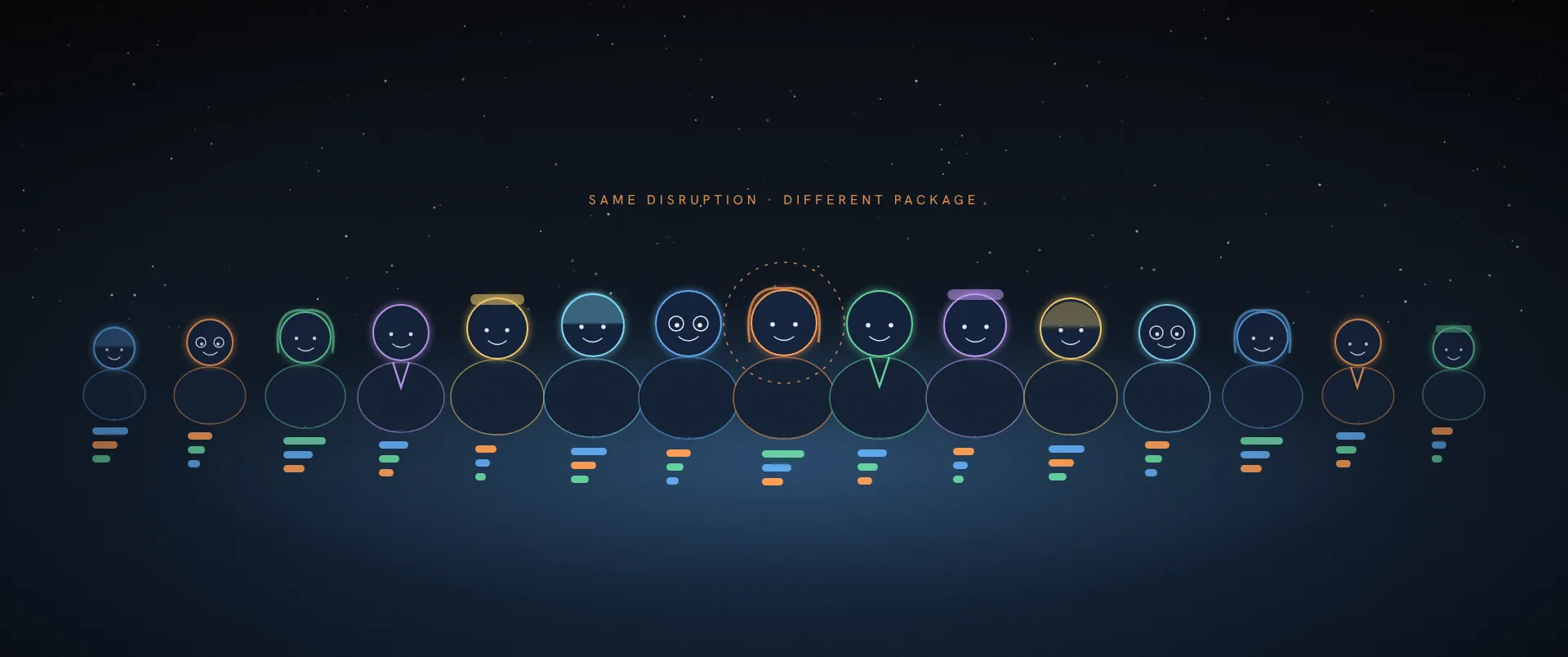
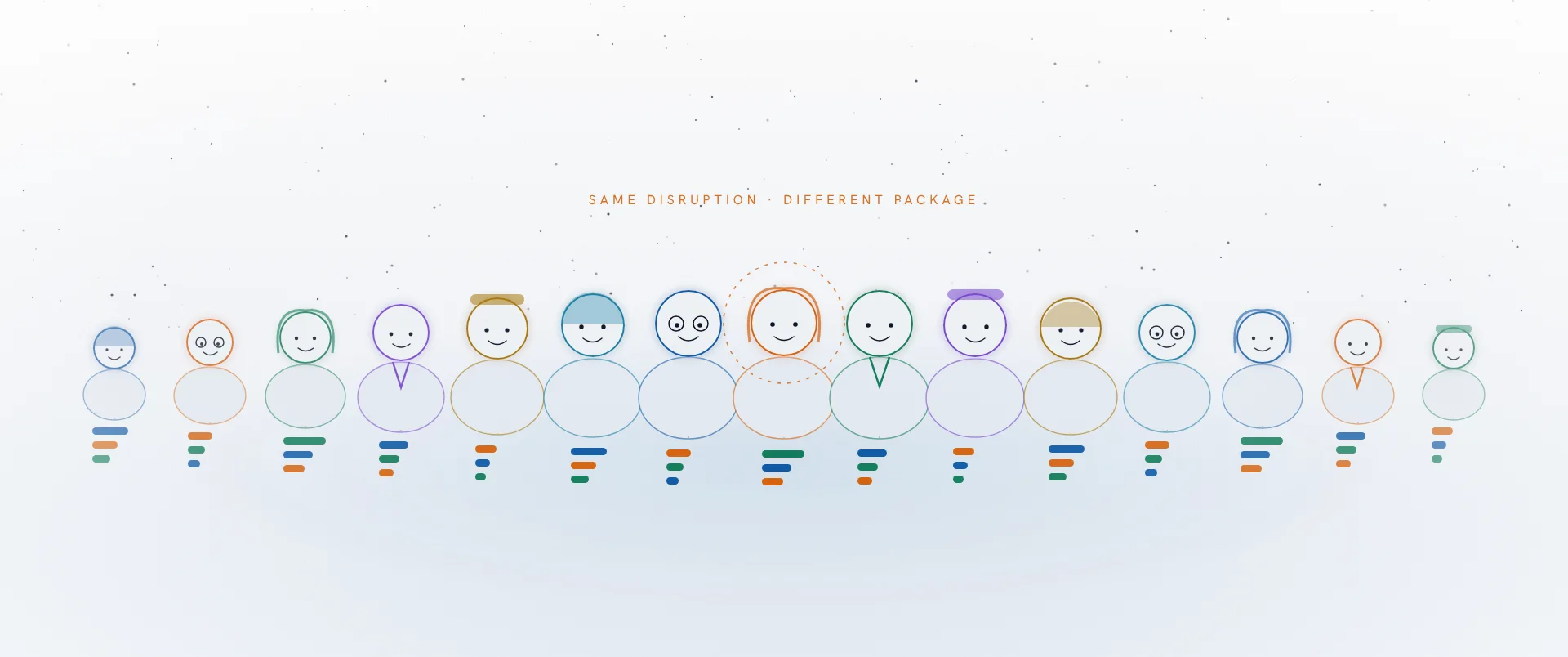
A crowd of different faces, each matched to its own combination of hotel, transport and meals. A crowd of different faces, each matched to its own combination of hotel, transport and meals.

In development, personalisation

Personalised Packages

The same disruption does not mean the same thing to every passenger. This project tailors the package to the trip and to the person: who is travelling and with whom, what they need, how tight their onward connection is, and how long the delay will be. A family, a business traveller and a passenger with reduced mobility affected by the same flight each receive the package that fits.

  • Packages shaped by the journey and by the passenger
  • The right hotel, transport and meal for each situation
  • Built on top of the digitalised disruption process

See it in action

Personalising disruption packages Different passengers from the same cancelled flight walk past a matching gate. Each one gets a different package of hotel, transport and meals: a family, a business traveller, a passenger with reduced mobility, a senior couple, a student and a frequent flyer. FLIGHT 4821 · CANCELLED EVERY PASSENGER IS DIFFERENT Family Business Reduced mobility Senior couple Student Frequent flyer MATCHING Family of four Two children, aged 4 and 7 Family room near the airport Shuttle with child seats Children's menu Business traveller Tight onward connection Rebooked on the 06:40 flight Airport hotel, short stay Breakfast to go Reduced mobility Wheelchair user, travelling alone Step-free accessible room Assisted transfer Meal served in the room Senior couple Early evening, long journey home Quiet room near the lift Door-to-door taxi Early dinner Student Travelling on a tight budget Standard room, shared transfer Public transport pass Meal voucher Frequent flyer Top-tier loyalty member Premium hotel suite Private car Lounge dinner

How the forecasting projects connect

How the three projects connect PETA-Project improves the forecasts. PETA-Engine produces them and writes them to the HubTM tables. HubTM AI Agentic reads them and decides. PETA-Projectvalidates better forecasts PETA-Engineproduces the forecasts HubTM AI Agenticturns them into decisions HubTM tables
PETA-Project improves the forecasts. PETA-Engine produces them. HubTM AI Agentic decides on them.

Forecast quality flows in one direction. A better prediction validated by PETA-Project is adopted by PETA-Engine, and HubTM AI Agentic, already connected, decides on the improved data without any change to its own code.

Want forecasts and decisions like these in your own operation?

Contact us